

I remember when I first started woodworking how ignorant I felt. There was so much to learn about tools and machinery and wood. I mean there was all that but then there was finishing to learn and also design, hardware and dovetails. Goodness. There was so much. It was just after college for me and my head was filled with poetry and debate and just a bit too much weed so my woodworking skills were not, shall we say, fully honed yet. As luck would have it though, after graduation I found work with a guy named Harvey Ronne. We poured sidewalks and driveways. Harvey thought of himself as a Renaissance man as any concrete worker might. The Romans had built their domed Pantheon with concrete after all.
Harvey also made furniture for himself in his garage shop. The coffee table he showed me came from a design right out of the Sears and Roebuck catalogue. I thought to myself, what if I got out of the concrete game and into something like this world of craft? Pouring concrete was increasing my love of the Romans without question, but if Harvey could do this, well I thought, why couldn’t I?
At the time the reasons were legion why I could not, but luckily ignorance and youthful arrogance won the day. I convinced myself that this challenging new path posed no problem that I couldn’t overcome. Besides it wasn’t a real job because I didn’t make but a few dollars from my first designs at the craft fairs. Why not dive into something so counter-intuitive?
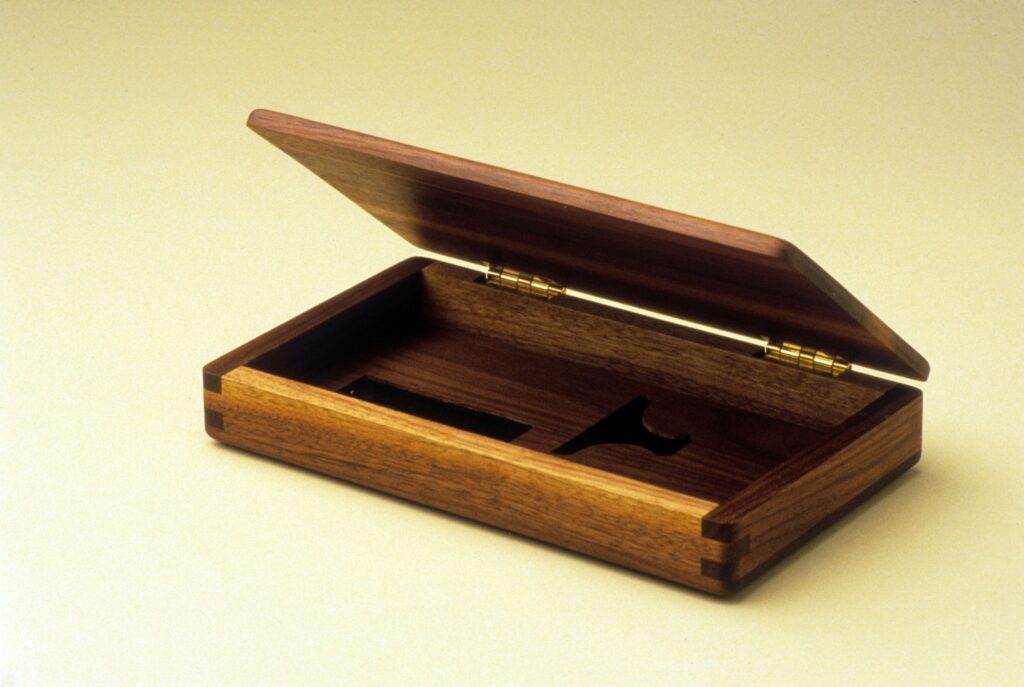
Part of my long self-directed apprenticeship was to go to the Sears store on Grand Avenue and up to the second floor there to stare at the wall of tools. I tried to figure out what they could do. I could have been staring at the Rosetta Stone for all that I understood of them. I didn’t buy many because I couldn’t afford them, but I would go to look, to study, to try to decipher what magic these tools held within. I started to put together my hand tool kit from the few tools my father had given me and the few Stanley chisels I could afford. I found my Starrett protractor and depth gauge at a junk shop on SE Foster. $5 for each. I even made a little walnut box to keep them in.
But the tools were still more of a mystery to me than anything else. All these saws and chisels and jigs and paraphernalia. I would stand and gawk, maybe reach out a tentative hand to touch and I would try to let knowledge fill me by standing close to these desired objects.
It could work.
Fast forward many decades and my curiosity had turned into a full blown tool buying sickness. I now feel I have to announce to my students: ‘Hello my name is Gary. I have a problem. I buy tools.’ But you know you see one you like, you kinda have to buy it. You may never see one like that again. It’s just how it is. I admit it. I am a tool junkie. This is the first step, this awareness, the first step towards buying more tools.
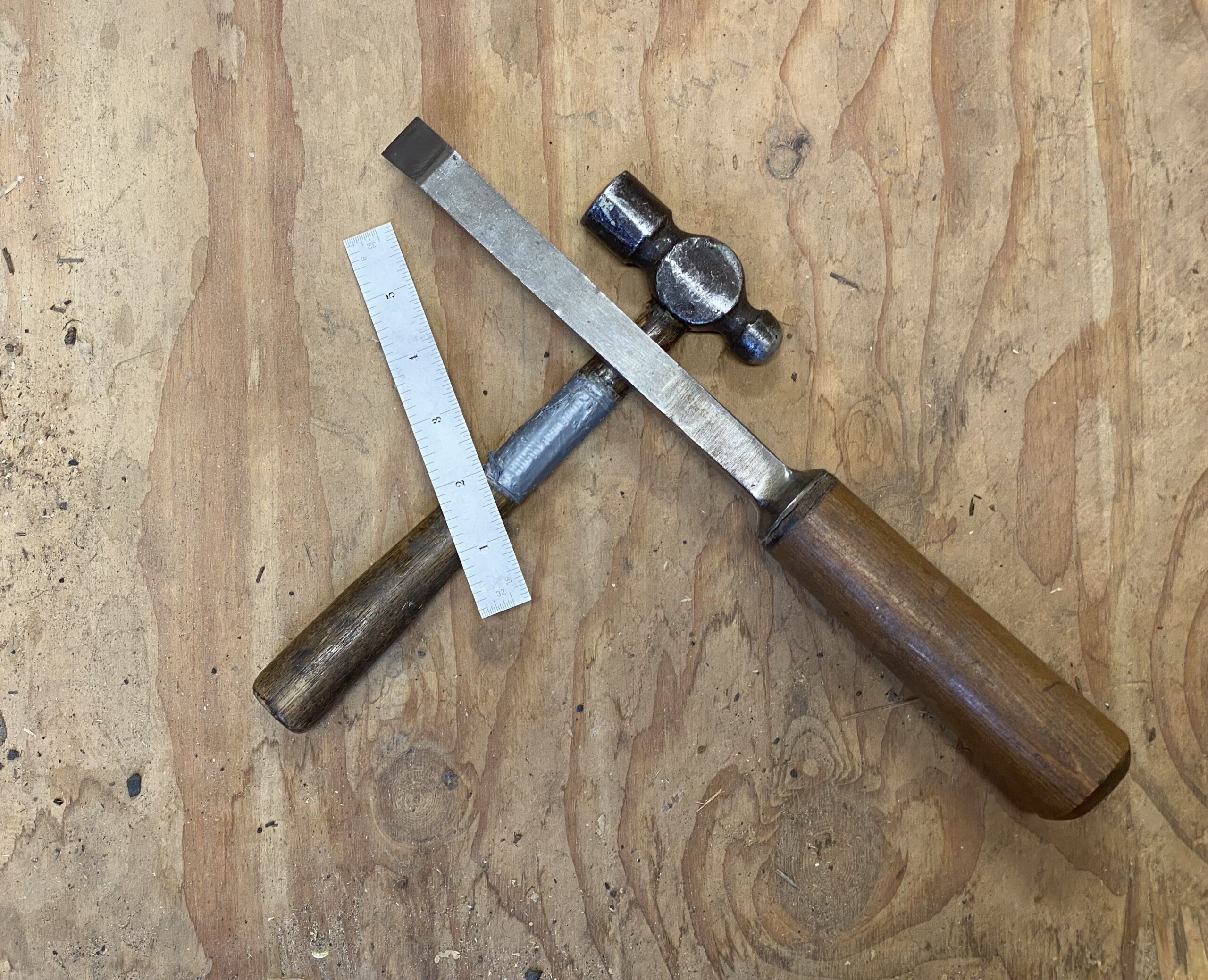
But there is power in these objects. Tools have potential and magic in their grip. I have learned much about them. These three categories: cutting tools, striking ones, and measuring devices are so important to our woodworking habit. I will share my found knowledge of them in a lecture on Jan. 31 called Wedges, Hammers, and Rule. I hope you’ll join me then.
We will discuss the value of good tools, the value of used tools, and which tools are essential for your kit [I’ll pick five to ten from each group.] This will be a great opportunity to stand and stare at a wall of tools with me but you will have an interpreter with you as I did not. I hope you’ll join me and Harvey and the others like us who have found these tools and their language irresistible.
Saturday Intro Lectures:
Wedges, Hammers, and Rule
A Basic Hand Tool Kit
Please consider the Build Along Session on Feb. 21st. Details forthcoming on a Hall Bench project. This BAS will walk you through the design and construction of a bench project with locking tenons. Also if you have a woodworking question please send it along. I will answer them on my upcoming podcasts. There are no stupid questions. Cheers. Send them to studio@Northwestwoodworking.com
https://northwestwoodworking.com/
And be sure to check out Highland Woodworking for great tools and information. Talk about a place to go and stand and stare at tools. They are our partner in education.