The Studio first saw light in 1997 when I wanted to try a new approach to craft education. It seemed that only folks with an MFA behind their name had value to schools or galleries or museums. Initials were deemed more important than skills or experience.
So I planned my own school in a way that was different. I imagined a place of good design, a school of thought, and a refuge for learning traditional craft work. I spent one month in an empty studio at an artist’s retreat in Vermont planning. I had all the space I needed to draw which I did slowly and poorly, or paint which I did not do at all.
But along with my drawing, I dreamed. I dreamed of what I thought a school of woodworking should be. I had studied the traditional MFA programs and considered joining one once. One sculpture professor told me that they trained their students to make their living doing sculpture. ‘Really?,’ I said. I didn’t believe that for a second.
As I tell my Mastery students, woodworking is a terrible way to make a living. It’s simply a great way to live. If your skills are in design and building, you’ve stepped into the wrong world if you want to make a living to match your day job as an attorney, software developer or sales type. To survive as an artist in our society you need marketing skills not artistic ones.
Most artists I knew who survived were ones with family money or wealthy spouses or the very few who were extremely talented from birth. I suffered none of those traits. My approach was to work hard, stay nimble, and keep challenging myself to see if maybe some gold would sift out of my silt. To me it seemed that the MFA programs only taught artists enough so that they too could impress each other. On the other end of the spectrum sat the trade schools which never seemed to value the idea of Quality.
There sat a place for a school, somewhere in the middle I thought, that wanted to do more than just show folks how to staple together cabinets and do less than bore the viewer with statements about materiality or representational realities. Give me something more solid than that to hang my hat on. How could I help folks connect with tools and materials and make objects that they were proud to make and satisfied to look at years later? Quality is an item that has been in descent since we have found more value in throwing away our furniture, our phones, and our sense of place.
To that end, and to get off my self-made soap box that was dovetailed together using only my Swiss Army Knife, a bit of string, and a found spoon for chopping out the pins, I offer to you a lecture this Saturday January 31 at 10am PT on the hand tools we use in the shop. The lecture is called Wedges, Hammers, and Rule. I hope you’ll join me to find some useful information on the tools I find essential in the shop and in my life.
Saturday Intro Lectures:
Wedges, Hammers, and Rule
A Basic Hand Tool Kit
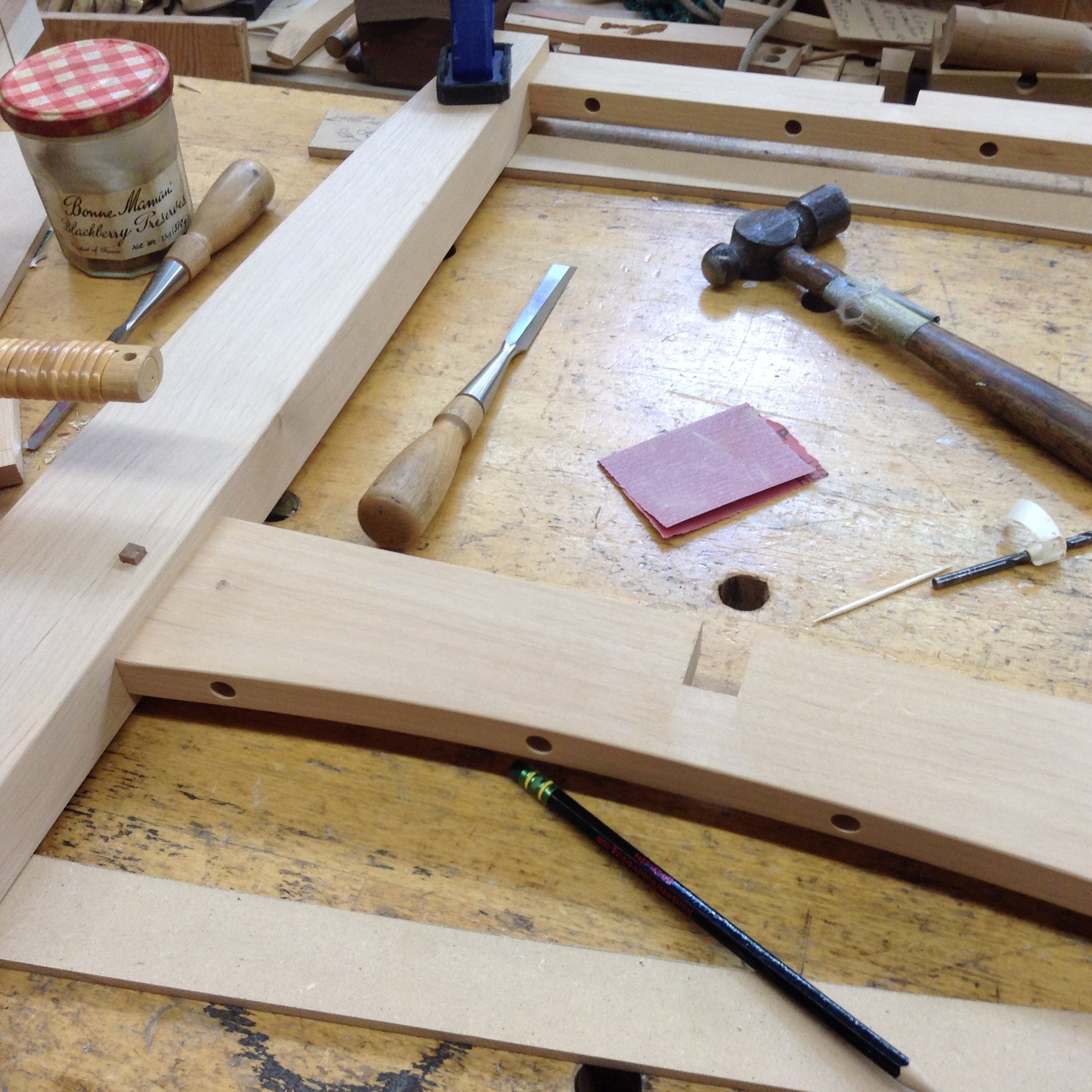
Please consider the Build Along Session on Feb. 21st. I’m working on a model now for this Hall Bench project. This BAS will walk you through the design and construction of a bench project with shaped rails and legs and mortise and tenon construction. It will be held over four Saturdays.
Also if you have a woodworking question please send it along. I will answer them on my upcoming podcasts. There are no stupid questions. Cheers. Send them to studio@Northwestwoodworking.com
And be sure to check out Highland Woodworking for great tools and information. Talk about a place to go and stand and stare at tools. They are our partner in education.